
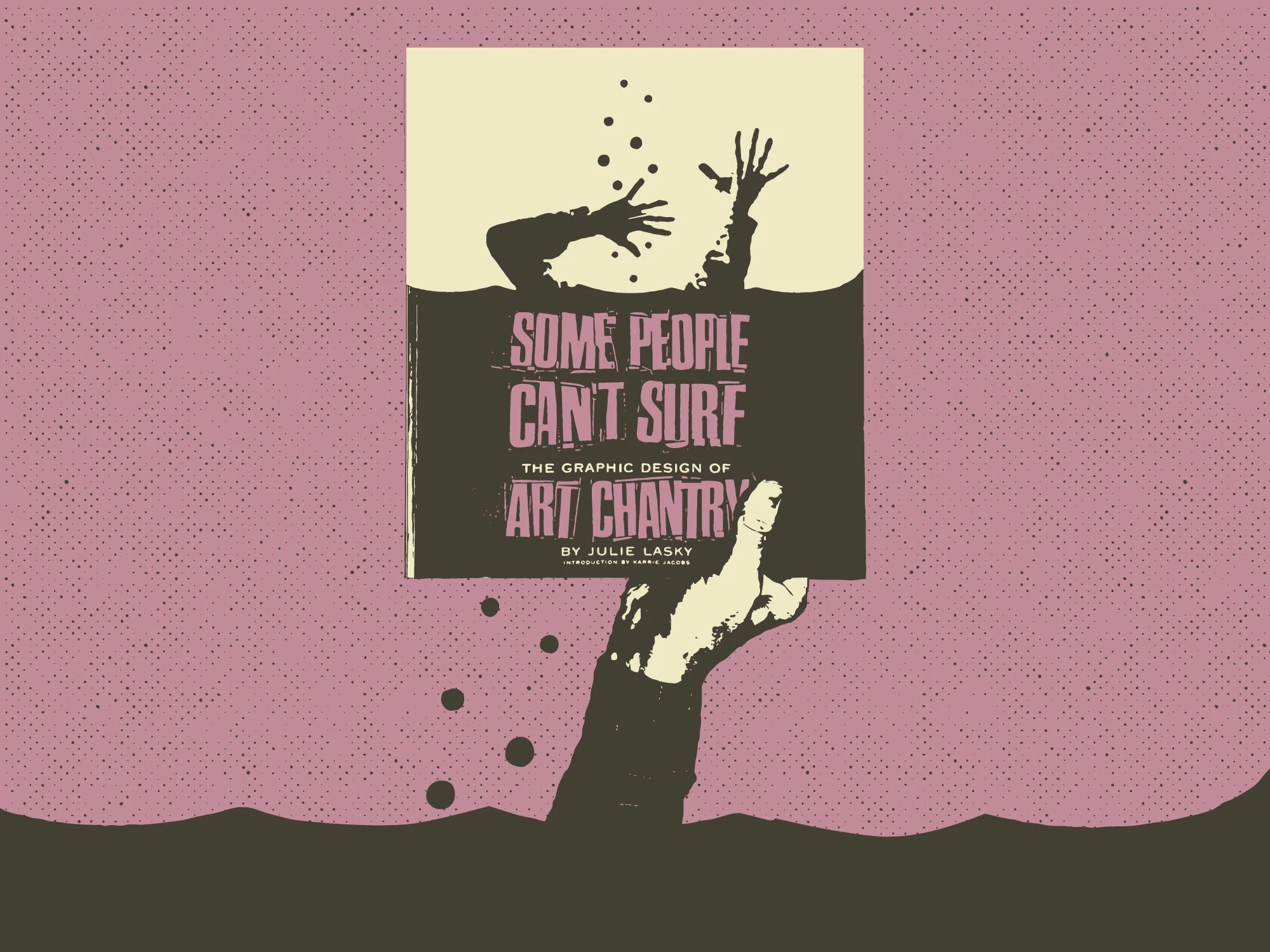
Years ago, I lent my copy of Some People Can't Surf to someone in Edmonton's design community. I'd honestly like to have it back, but the trouble is I can't remember who I lent it to.
The book is by Art Chantry, one of my all-time favourite graphic designers. He built a career by embracing the visual language of everyday America. Industrial catalogues, supermarket flyers, wrestling posters, pulp paperbacks and garage sale signs all found their way into his work. Long after most designers had embraced computers, he was still working with paste-up, mechanicals, and photostats. It wasn't nostalgia for nostalgia's sake. Those methods were part of how he thought and part of how he wanted his work to speak.
His work never felt like it was observing a culture from the outside. It became part of it. His posters, record sleeves, and packaging didn't just advertise a scene. They helped define a time and place. That's a difficult thing for any designer to accomplish, regardless of the tools they're using.
I don't romanticize mechanical boards any more than I romanticize the software I use today. Computers and programs are simply the tools I happen to work with. If tomorrow's tools are different, I'll probably complain about them too, then get on with the job.
Graphic design has been having existential crises for as long as I've been paying attention. Desktop publishing was supposed to be the end of design. Then stock photography. Then templates. Then crowdsourcing. Then Canva. Now it's AI.
Maybe every generation of designers gets its own version.
What tends to get lost is why we make things in the first place. Chantry wasn't devoted to paste-up because he hated computers. He cared about the stories that his chosen methods could tell and the honesty they brought to his work. The tools were never the point. They were inseparable from the way he saw the world.
The software will change. It always has. The workflows will change too. So will the arguments. Through all of it, good work will still ask people to stop for a second and pay attention.
So yes, if you happen to have my copy of Some People Can't Surf, I'd love to have it back. Not because it's a relic from a better time, but because every now and then it's nice to be reminded that design has survived a lot of revolutions, and the one that we’re going through right now probably won't be the last.
Hold steady.