
The Dream
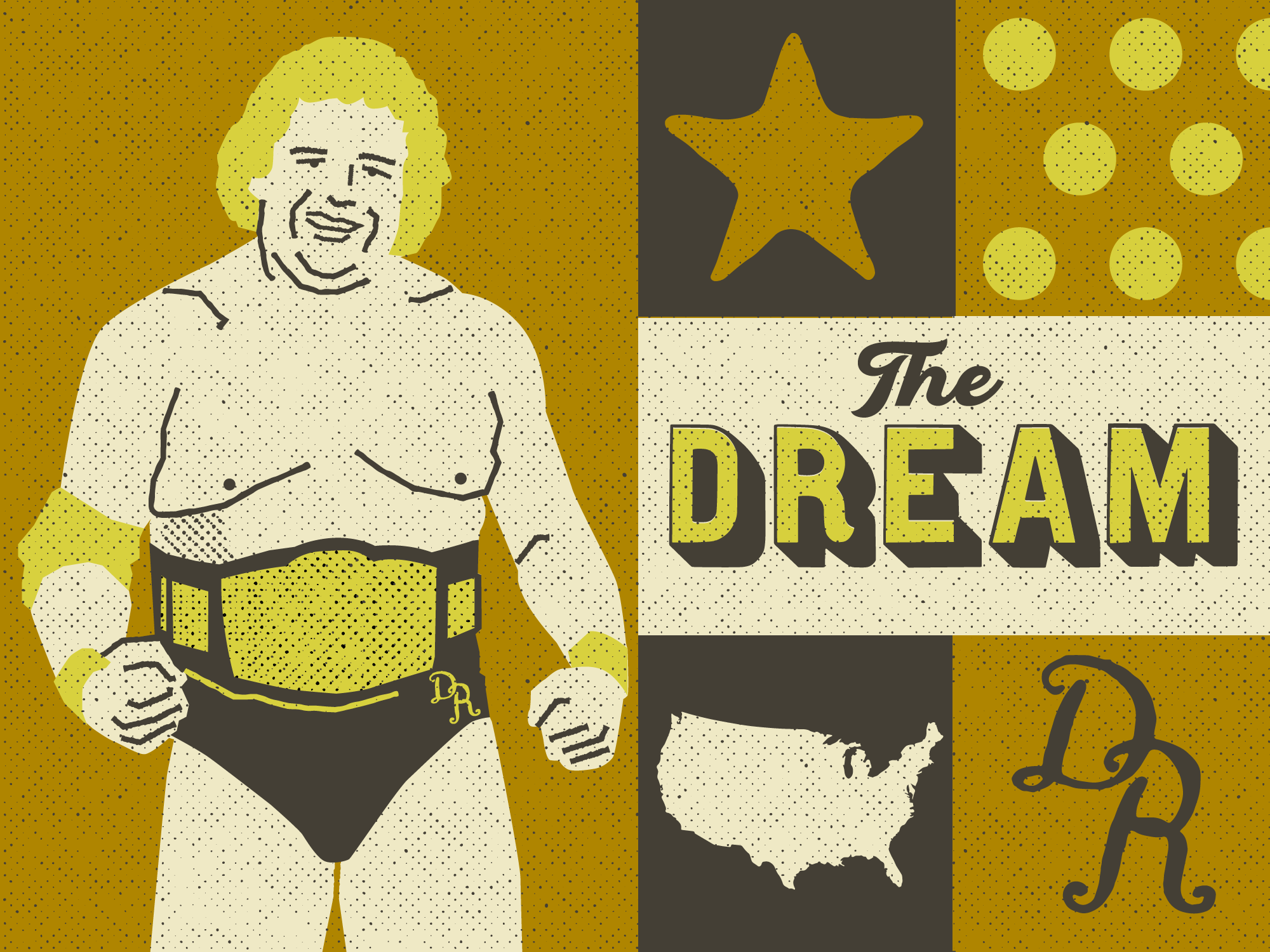
Dusty Rhodes should not have worked. Not on paper, anyway. He did not have the body or the looks of a traditional heavyweight champion, and he talked with a prominent lisp. In an industry built on spectacle and polish, those are exactly the kinds of things you would expect to be smoothed out. To remove anything that feels unmarketable.
By those standards, in any era, Dusty should not have worked. But he became one of the greatest to ever do it. His flaws did not undermine him. They anchored him. When he spoke, people did not just hear a character, they believed a person. The performance felt real because it could not be fully contained.
Branding is obsessed with control. It relies on polished templates, familiar patterns, and removing anything that feels too specific, too local, or too rough around the edges. The result is often competence without character. But character is what people relate to and remember.
When I start a project, I look for what resists simplification. The regional habits. The informal language. The unpolished history. The parts that do not fit neatly into a box. Those unwieldy things are often treated as noise or obstructions. I see them as signals.
You do not make a brand stronger by removing its character. You make it stronger by trusting it. The memorable parts are rarely the polished ones. They are the human ones.
Hold steady.